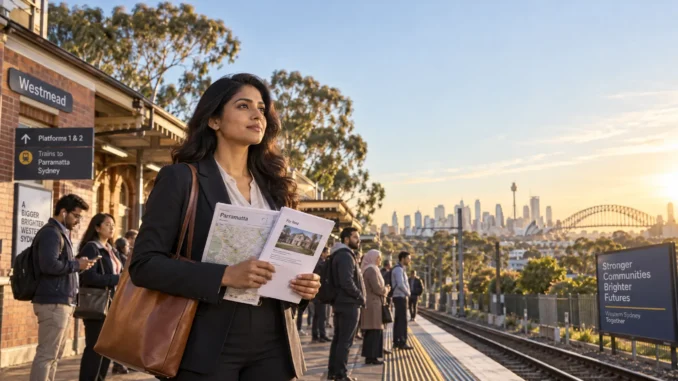
Before the Data: A Conversation This Industry Refuses to Have
Most “cheapest suburbs” articles are the same. A table of median rents. A paragraph about train lines. A stock photo of the Opera House. Done.
This is not that article.
This guide is written for the occupational therapist from Zimbabwe who just received her skills assessment from AHPRA and needs to be within commute distance of Westmead Hospital. For the structural engineer from the Philippines who’s been granted a Subclass 190 visa and has $8,000 in savings to bridge the gap between landing and first paycheck. For the registered nurse from India who chose Sydney over Melbourne because her hospital sponsor is in Randwick — and is now staring at rental listings wondering if she made a catastrophic financial mistake.
Sydney in 2026 is the second most expensive rental market in the Southern Hemisphere. Only Auckland occasionally trades places with it. The median weekly rent for a house in Greater Sydney now sits at approximately $750–$830/week depending on the data source and measurement period. For units, the median is $600–$680/week. These are medians — meaning half the market is above these figures.
If you are a skilled migrant arriving on a 190, 189, 491, or 482 visa, you are not just navigating an expensive rental market. You are navigating it without an Australian rental history, often without a local guarantor, sometimes without an Australian bank account, and in a legal framework — the NSW tenancy system — that is significantly different from what you may have experienced elsewhere.
The goal of this guide is to translate three layers of complexity — the data on affordable suburbs, the reality of renting as a newcomer, and the strategic decisions that separate those who secure housing quickly from those who spend their first month in a serviced apartment burning through their savings buffer — into something you can actually act on.
Let’s begin.
RELATED ARTICLE:
- Renting Your First Apartment in Toronto With No Credit History: The Newcomer’s 2026 Survival Guide
- Australia Nursing Jobs Paying $85,000 Annually — Visa Sponsorship, Requirements and How to Apply in 2026
Part One of Suburbs to Rent Near Sydney in 2026: Understanding Sydney’s Rental Geography — The Rings You Need to Know
Sydney’s metropolitan area is organised, roughly speaking, in concentric rings radiating outward from the CBD (Central Business District). Understanding these rings is essential to decoding the rental market.
The Inner Ring (0–10km from CBD): Suburbs like Surry Hills, Newtown, Glebe, Pyrmont, Chippendale, Redfern, Leichhardt. These are the most walkable, culturally vibrant, transit-rich areas. They are also the most expensive. A one-bedroom unit in Surry Hills averages $700–$850/week in 2026. You will not find affordability here unless you are in a share house.
The Middle Ring (10–25km from CBD): Suburbs like Parramatta, Burwood, Ashfield, Marrickville, Hurstville, Hornsby, Ryde, Strathfield. This is where the majority of Sydney’s skilled migrant population concentrates. Rents are lower than the inner ring but rising rapidly. One-bedroom units range from $450–$600/week in most of these areas. Transit connectivity is generally good — most are served by trains on the T1–T9 network.
The Outer Ring (25–60km from CBD): This is where this guide focuses its attention. Suburbs like Penrith, Liverpool, Campbelltown, Blacktown, Windsor, Richmond, Gosford, and Wollongong (technically a separate city but included here for strategic purposes). Rents drop significantly — one-bedroom units available for $330–$450/week — but the commute question becomes more complex, and the infrastructure varies dramatically.
The Strategic Framework for Skilled Migrants:
Your suburb choice should be determined by the intersection of three factors:
- Where your sponsoring employer or primary work location is (not necessarily the CBD)
- Your realistic transport budget and commute tolerance (a 90-minute commute is liveable for some people; for others it is career-limiting and mentally exhausting)
- Your savings runway (how many weeks of rent you can cover before your first Australian paycheck, factoring in the bond + first two weeks’ rent required upfront)
Once you’ve answered these three questions, this guide’s data becomes a decision tool rather than just a list.
Part Two: The Data Framework — How We’re Measuring Affordability
The rental data in this guide draws from multiple sources that skilled migrants should themselves bookmark and monitor:
- Domain.com.au – Australia’s second-largest property platform, which publishes quarterly rental reports by suburb
- realestate.com.au (REA Group) – The largest platform; their PropTrack Rental Report is the most comprehensive publicly available dataset
- NSW Fair Trading Rental Bond Data – The NSW government collects bond data (essentially real transaction data) which is published quarterly and is more accurate than asking prices
- CoreLogic – The industry benchmark for property data; their reports are often paywalled but summaries are available through major newspapers
- SQM Research – Tracks vacancy rates by suburb, which is critical context for understanding how competitive a market is
All rent figures in this guide represent 2026 Q2/Q3 median asking prices for unfurnished properties. These figures will shift — Sydney’s rental market is not static — and you should verify current numbers through the platforms above before making decisions.
One more thing: Sydney’s vacancy rate in 2026 sits at approximately 1.1–1.4% in most middle-ring suburbs and as low as 0.6–0.8% in some inner areas. This is a landlord’s market of the most extreme variety. Every strategy in this guide is written with that reality in mind.
Part Three: The Cheapest Suburbs Near Sydney — An Honest, Neighbourhood-by-Neighbourhood Assessment
Tier 1: The Most Affordable — Under $400/Week for a One-Bedroom Unit
1. Mount Druitt (Western Sydney — Blacktown LGA)
Median One-Bedroom Rent: $340–$380/week
Train: T1 Western Line — approximately 58 minutes to Central Station
Demographics: One of Sydney’s most culturally diverse communities — significant Pacific Islander, South Asian, African, and Indigenous Australian populations
Walk Score / Liveability: Moderate — serviced by Westfield Mount Druitt, Western Sydney University Nirimba campus nearby, several large supermarkets, hospitals including Blacktown Hospital (10 minutes by car)
The Truth About Mount Druitt:
No guide honest enough to be useful can discuss Mount Druitt without acknowledging its reputation — and then immediately challenging it. Mount Druitt has carried a stigma in Sydney media for decades that is significantly disconnected from the lived reality of the hundreds of thousands of residents who call it home. It is not the suburb that tabloid journalism describes. It is a working-class, multicultural, community-oriented area with improving infrastructure, a $3.6 billion investment in Western Sydney Aerotropolis 20km away, and rapidly improving social services.
For skilled migrants, Mount Druitt offers something rare in Sydney: affordable private rental stock, a strong community of fellow migrants who can provide the social infrastructure (temple, mosque, cultural grocery stores, community groups) that makes a new country feel like home, and proximity to the Western Sydney employment corridor — which, in 2026, is the fastest growing employment zone in New South Wales.
Who should consider it: Healthcare workers employed at Blacktown Hospital or Auburn Hospital, professionals working in the Western Sydney employment corridor (logistics, construction, manufacturing around the Aerotropolis), families who need space and cannot afford the middle ring.
Watch out for: The T1 train line is one of Sydney’s most frequently delayed and overcrowded. If you are commuting to the CBD daily, factor this into your mental health calculation, not just your time calculation. Some pockets of Mount Druitt have higher rates of property crime than Sydney averages — research specific streets before committing. Not all parts of the suburb are equal.
FOR CHEAP SUBURBS CLICK HERE
2. Campbelltown (Macarthur Region — 52km SW of CBD)
Median One-Bedroom Rent: $340–$375/week
Train: T8 Airport & South Line — approximately 75–90 minutes to Central Station; direct without changes
Demographics: Growing South Asian and Filipino communities; significant Anglo-Australian working-class community; increasing international student presence due to Western Sydney University Campbelltown campus
Walk Score: High for the suburb centre; lower for surrounding residential areas
The Truth About Campbelltown:
Campbelltown is undergoing one of the most significant transformations of any Sydney suburb. The Western Sydney Airport (Nancy-Bird Walton Airport) at Badgerys Creek, opening in stages through 2026, has triggered infrastructure investment that is beginning to ripple through the Macarthur corridor. The recently announced South West Rail Link extensions and road upgrades are changing Campbelltown’s commuter math.
The suburb has a genuine town centre — Campbelltown Mall, a major hospital (Campbelltown Hospital, a NSW Health teaching hospital), multiple TAFE and university campuses, and a growing hospitality and retail sector. This is not a dormitory suburb; it has economic activity of its own.
For skilled migrants in healthcare, aged care, and education — three of the largest visa-sponsored sectors in NSW — Campbelltown represents extraordinary value. A registered nurse employed at Campbelltown Hospital can literally walk to work from a one-bedroom apartment costing $360/week. The same nurse commuting from Parramatta would pay $500+/week in rent and spend two hours a day on public transport.
Skilled migrant communities to connect with:
- Filipino Community of Campbelltown – Active social and support network
- Campbelltown Interfaith Network – Connects newly arrived families with community support
- Settlement Services International (SSI) – Campbelltown office provides newcomer settlement support
3. Penrith (Western Sydney — Penrith LGA)
Median One-Bedroom Rent: $360–$410/week
Train: T1 Western Line — approximately 65 minutes to Central Station (Express services exist but are limited)
Demographics: Diverse and growing; significant South Asian (particularly Indian Punjabi and Sikh community), Filipino, and Pacific Islander populations
Walk Score: Relatively high for a Western Sydney suburb — Westfield Penrith is one of the largest shopping centres in Australia; good walkability around the station precinct
The Truth About Penrith:
Penrith is, pound for pound, one of the best value propositions in the entire Greater Sydney market for skilled migrants. Here’s why: the Penrith Health and Education Precinct — anchored by Nepean Hospital, Western Sydney University Penrith campus, and a growing health cluster — is one of the most active healthcare employment zones outside the CBD. An entire pipeline of internationally trained nurses, doctors, allied health professionals, and medical researchers are being absorbed into this precinct every year.
Beyond healthcare, Penrith is the commercial and administrative capital of Western Sydney’s outer ring. Local government, construction, retail management, and logistics are all significant employers. You do not need to commute to the CBD from Penrith — and increasingly, you shouldn’t plan to.
The Glenmore Park and Jordan Springs residential areas adjacent to Penrith offer newer housing stock — townhouses and duplexes with two and three bedrooms available at $450–$550/week — that is simply unavailable at this price point anywhere within 40km of the CBD in inner or middle Sydney.
The Sikh community angle: Penrith has one of the most established Sikh Gurdwara communities in Western Sydney (Sri Guru Nanak Darbar Gurdwara at nearby Glenwood). For Punjabi migrants specifically, the community networks in the Penrith-Blacktown corridor are among the strongest in Australia.
4. Gosford (Central Coast — 80km North of CBD)
Median One-Bedroom Rent: $320–$380/week
Train: T1 North Shore & Central Coast Line — approximately 75–90 minutes to Central Station (some express services faster)
Demographics: Predominantly Anglo-Australian; growing South Asian community particularly in surrounding areas; significant retiree population
Walk Score: Moderate — a proper regional city with its own CBD, hospital, and commercial centre
The Truth About Gosford:
Gosford sits in a different geography than the Western Sydney suburbs above — it is on the Central Coast, a region that technically sits between Sydney and Newcastle and functions as a semi-independent economy with significant internal employment.
For skilled migrants whose work is location-flexible (IT professionals, consultants, remote-eligible roles, or professionals employed at Gosford Hospital, one of the Central Coast’s major health facilities), Gosford offers something genuinely rare: affordability combined with liveability. The Central Coast has beaches, national parks, a functioning local economy, and a slower pace of life than Sydney proper. Many skilled migrants who initially planned to stay short-term have ended up putting down roots here specifically because the quality-of-life-to-cost ratio is hard to match anywhere in Greater Sydney.
The Central Coast Council has actively courted international professionals, and the healthcare sector in particular is actively recruiting from overseas. If your visa sponsorship is through Central Coast Local Health District, Gosford is not just a budget option — it is the logical choice.
The commute reality check: 80km is not a casual train ride. If you are commuting to Sydney CBD five days a week from Gosford, the 90-minute each-way journey (plus walking, waiting) will consume approximately 15+ hours of your week. This is not sustainable for most professionals. Gosford is a strong option if: (a) you work locally, (b) you work from home 3+ days per week, or (c) you work in the CBD but commute only 2–3 days a week.
Tier 2: Affordable With Better Amenity — $400–$480/Week for a One-Bedroom
5. Liverpool (South Western Sydney — 34km from CBD)
Median One-Bedroom Rent: $390–$440/week
Train: T2 Inner West & Leppington Line — approximately 50 minutes to Central Station; also T3 Bankstown Line connections
Demographics: One of Sydney’s most genuinely multicultural suburbs — substantial Lebanese, Vietnamese, Filipino, Indian, and Iraqi communities; enormous diversity
Walk Score: High — Liverpool CBD is a proper urban centre with a Westfield, multiple banks, government services, university campus (Western Sydney University Liverpool), and Liverpool Hospital
The Truth About Liverpool:
Liverpool deserves its own extended treatment because it is arguably the most strategically valuable suburb in this entire guide for skilled migrants. Here’s the case:
Liverpool is the administrative and commercial capital of South Western Sydney — one of the fastest-growing urban regions in Australia. Liverpool Hospital is a major NSW Health facility with over 1,000 beds, a Level 1 trauma centre, and one of the most active international medical graduate programs in the state. Healthcare professionals employed at Liverpool Hospital can live in Liverpool itself for $390–$440/week and walk or take a single-stop bus to work.
Beyond healthcare: Western Sydney University’s Liverpool campus is expanding. TAFE NSW Liverpool is a major campus. The South Western Sydney Primary Health Network has its operational hub here. Local and state government offices generate consistent professional employment. The legal, accounting, and financial services sector serving Western Sydney’s large multicultural population is headquartered largely in Liverpool.
The diversity of Liverpool is not incidental — it is structural. The suburb functions as the unofficial capital of a migrant corridor that stretches from Fairfield through Cabramatta to Bankstown. The food, religious, cultural, and community infrastructure for migrants from South Asia, Southeast Asia, the Middle East, and Africa is extraordinary. Within a 5km radius of Liverpool station you will find Vietnamese grocery stores, Indian spice markets, Filipino bakeries, Lebanese butchers, halal supermarkets, and mosques, temples, and churches representing dozens of traditions.
For skilled migrants: Liverpool may be the single best first suburb in Greater Sydney that this guide recommends. It combines genuine affordability, strong employment proximity (particularly for healthcare), exceptional community infrastructure, and improving transit.
6. Blacktown (Western Sydney — 34km from CBD)
Median One-Bedroom Rent: $400–$450/week
Train: T1 Western Line — approximately 50 minutes to Central Station
Demographics: Highly diverse — large Indian, Filipino, Pacific Islander, and Chinese communities; one of NSW’s fastest-growing LGAs
Walk Score: Moderate-High around the station; lower in outer residential areas
The Truth About Blacktown:
Blacktown LGA is the largest local government area in New South Wales by population, and its demographic transformation over the past 15 years has been dramatic. What was once a predominantly Anglo-Australian working-class suburb is now one of Sydney’s most culturally complex communities, with an estimated 140+ languages spoken in homes across the LGA.
For skilled migrants, Blacktown offers several distinct advantages:
Healthcare Employment Hub: Blacktown Hospital (part of Western Sydney Local Health District) is a major facility and significant employer of internationally trained health professionals. Mount Druitt Hospital is nearby. The density of GP clinics, aged care facilities, and allied health practices in the corridor between Blacktown and Parramatta is among the highest in metropolitan Sydney outside the inner city.
Indian Community Infrastructure: The Blacktown-Seven Hills corridor has one of the most established Indian diaspora communities in Australia. The Indian Subcontinental Association of Australia operates in this area. Multiple Indian grocery stores (including subregional specialties — South Indian, Punjabi, Gujarati), temples (Hindu, Sikh Gurdwaras), and community associations exist here. For Indian skilled migrants navigating their first months in Australia, this community network is invaluable.
The Stanhope Gardens / Quakers Hill Gradient: These suburbs immediately north of Blacktown proper offer newer housing stock — townhouses and family homes — at rents of $500–$650/week for a three-bedroom, which is extraordinary value for families. These are well-maintained residential areas with good schools and parks.
7. Fairfield (South Western Sydney — 28km from CBD)
Median One-Bedroom Rent: $370–$420/week
Train: T2 Inner West & Leppington Line — approximately 43 minutes to Central Station
Demographics: One of the highest concentrations of humanitarian arrivals and established migrant communities in Australia — enormous Vietnamese, Cambodian, Assyrian, Iraqi, and recent Afghan communities
Walk Score: High — Fairfield has a well-functioning suburban CBD
The Truth About Fairfield:
Fairfield is different in character from the other suburbs in this guide, and that difference matters for certain skilled migrants more than it does for others.
Fairfield’s story is largely a humanitarian migration story — it absorbed large numbers of Vietnamese refugees after 1975, Cambodian refugees in the 1980s, Iraqi Assyrian Christians in the 1990s and 2000s, and more recently Afghan arrivals. This history has created an extraordinarily developed settlement services ecosystem. The Fairfield City Council’s Community Development team, Advance Diversity Services, SSI (Settlement Services International), and dozens of community organisations have decades of experience supporting newly arrived people.
For skilled migrants — who are distinct from humanitarian arrivals but face some overlapping challenges in their first months — this infrastructure means: affordable housing, community support, established cultural institutions, and landlords who are often themselves migrants and approach rental applications with greater cultural understanding.
The food scene in Fairfield (and adjacent Cabramatta, the cultural heart of Sydney’s Vietnamese community) is also worth noting for quality of life reasons. Some of Sydney’s best and most affordable Vietnamese, Cambodian, and Middle Eastern food is in this corridor. For newcomers navigating cultural dislocation, access to familiar food is not trivial.
8. Parramatta (Geographic Centre of Sydney — 23km from CBD)
Median One-Bedroom Rent: $440–$510/week
Train: Multiple lines — T1, T5, T6; approximately 35 minutes to Central Station; Light Rail connecting to Westmead
Demographics: Extremely diverse — significant South Asian (particularly Indian and Sri Lankan), Chinese, Korean, Filipino, and Middle Eastern populations
Walk Score: Very High — Parramatta is effectively Sydney’s second CBD
The Truth About Parramatta:
Parramatta is the geographic centre of the Sydney Basin and the state government has officially designated it as Sydney’s second CBD. This is not hyperbole — the NSW government, Westpac, KPMG, and dozens of other major employers have relocated significant operations to Parramatta over the past decade. The $4 billion Westmead Health Precinct — anchored by Westmead Hospital (one of Australia’s largest hospitals), the Children’s Hospital Westmead, and multiple research institutes — is the largest healthcare employment cluster in the Southern Hemisphere.
Parramatta is slightly above the “cheapest” threshold in this guide but is included because for many skilled migrants, particularly those in healthcare, law, finance, and government services, working in Parramatta means you should live in Parramatta — or one of the adjacent western suburbs where rents are genuinely low. The math changes completely when you eliminate a 50-minute train commute to the CBD.
The Indian community in Parramatta is legendary. Church Street — sometimes called “Little India” — is a strip of Indian restaurants, grocery stores, jewellers, and cultural businesses that is one of the most vibrant diasporic commercial streets in Australia. For South Asian skilled migrants, the social and cultural infrastructure here reduces the psychological weight of migration enormously.
If Parramatta itself is slightly expensive for your budget: Look at Wentworthville (5 minutes west by train, rents $390–$440), Merrylands ($380–$430), or Granville ($370–$420). These suburbs are effectively outer Parramatta neighbourhoods with train connections to Parramatta’s employment precinct and significantly lower rents.
Tier 3: The Hidden Gems — Underrated Suburbs Worth Serious Consideration
9. Wyong / Tuggerah (Central Coast — 85km North of CBD)
Median One-Bedroom Rent: $290–$340/week
Train: T1 North Shore & Central Coast Line — 80–100 minutes to Central Station
Demographics: Predominantly Anglo-Australian; growing diverse community; significant healthcare workforce
For Skilled Migrants: The cheapest accessible rental option near the Sydney-Newcastle corridor. Only viable if working locally or with strong remote flexibility.
10. Wollongong (Illawarra Region — 80km South of CBD)
Median One-Bedroom Rent: $360–$430/week
Train: South Coast Line — approximately 80–90 minutes to Central Station
Demographics: Strong international student presence due to University of Wollongong (UOW); growing Indian and South Asian community; significant Pacific Islander community
Walk Score: High for the CBD area — Wollongong is a proper regional city
The Truth About Wollongong:
Wollongong occupies a special category: it is simultaneously the cheapest large city within commuting distance of Sydney and an entirely self-sufficient economy. The University of Wollongong, Wollongong Hospital (a major Illawarra Shoalhaven Local Health District facility), TAFE NSW Wollongong, and a significant steel and advanced manufacturing sector create strong local employment for skilled migrants in engineering, healthcare, education, and research.
For skilled migrants sponsored by UOW, Wollongong Hospital, or any Wollongong-based employer, this is not a compromise location — it is a genuine first choice. The city has a beachside location (Crown Street Mall is a 10-minute walk from the beach), excellent restaurants, a functioning arts scene, and a cost of living that makes Sydney feel absurd by comparison.
The Indian student and graduate community at UOW has created strong South Asian social infrastructure in Wollongong over two decades. The Sri Lankan community is also well-established. For newer arrivals from the Philippines (who make up a significant portion of healthcare workers in the Illawarra), there are active Filipino community organisations.
The commute reality: 80 minutes by train to Sydney CBD is significant but not unusual for Wollongong residents who work in Sydney. The train line has good amenity — it runs along the coast for part of the journey and is cleaner and more comfortable than many Sydney metropolitan lines. Many Wollongong professionals do a “reverse commute” pattern — 3 days in Wollongong, 2 days in Sydney — which is increasingly normalised post-2020.
Part Four: The NSW Rental Application System — What Skilled Migrants Must Know
Australia’s rental application system is different from the UK, India, the US, or most other countries — and the differences can cost you an apartment if you don’t understand them.
How Australian Rental Applications Work
In NSW, most property managers use digital application platforms — primarily 1Form (by realestate.com.au), 2Apply (by Domain), or Snug.com. These platforms standardise the application process and allow property managers to process multiple applications simultaneously.
A typical NSW rental application requires:
Identity Documents:
- Passport (100 points)
- Visa grant notice (for migrants on temporary visas)
- Driver’s licence or state photo ID
- Bank card
Proof of Income:
- Two most recent payslips (Australian preferred, but foreign payslips with translation accepted)
- Employment letter stating salary and commencement date
- Bank statements (3–6 months)
- For self-employed applicants: tax returns and/or accountant’s letter
Rental History:
- Contact details of previous landlords or property managers
- A reference from your most recent landlord (this is the most weighted factor after income)
References:
- Personal or professional references (2–3 typically)
The Skilled Migrant Gap:
Here’s where the system doesn’t fit your reality. You may have no Australian rental history. Your income may be from overseas and in a foreign currency. Your referees may be in different time zones. Your identity documents may be unfamiliar to a property manager in Penrith who has never encountered a Nigerian international passport or a Philippine Statistics Authority-issued birth certificate.
Solution framework — assemble these before you start applying:
1. A NSW Rental Reference from Your Home Country Landlord:
Written in English, dated within the last 3 months, on letterhead if possible, describing: the property address, dates of tenancy, monthly rent amount, your payment reliability, and whether your landlord would rent to you again. Have it notarised or witnessed by a JP (Justice of the Peace) or legal professional in your home country if possible.
2. An Employer Letter from Your Australian Sponsor:
If you are on a 482 (Temporary Skill Shortage) visa, your sponsoring employer has already submitted significant documentation to the Department of Home Affairs on your behalf. Ask your HR team for an employment letter that confirms your position, annual salary, permanent/ongoing nature of the role, and includes the company’s ABN. This document, paired with your visa grant notice, is the most powerful thing in your application.
3. Australian Bank Account:
Open one before you land if possible. Commonwealth Bank (CommBank), ANZ, NAB, and Westpac all offer accounts that can be set up from overseas through their international arrival programs. Having an Australian bank account — even with a modest balance — signals permanence and stability to a property manager.
4. A Cover Letter (Often Makes the Difference):
Australian property managers read hundreds of applications per week through 1Form. The fields are standardised, the information is identical in format. A brief, professional, personalised cover letter — attached as a PDF or pasted into the “additional information” field — stands out. It should explain: who you are, why you are moving to Australia, your employment situation, your commitment to maintaining the property well, and why this specific property suits your needs. Keep it under 300 words. Make it human.
5. The 100-Point Identity Check:
Australia’s rental industry uses a points-based identity verification. Understand the points before you apply:
- Australian Passport: 70 points
- Foreign Passport: 70 points
- Medicare Card: 25 points
- Australian Driver’s Licence: 40 points
- Visa Grant Notice: 25 points
- Birth Certificate: 30 points
- Bank Statement (with your name/address): 25 points
Part Five: The Bond System — NSW’s Financial Requirements and How to Prepare
In NSW, a residential rental bond is typically 4 weeks’ rent (for most residential properties). This is held by NSW Fair Trading’s Rental Bond Board for the duration of your tenancy and returned (less any legitimate deductions) at the end.
Additionally, you will typically pay 2 weeks’ rent in advance (first two weeks) at lease signing.
Total upfront cost calculation:
- Bond: 4 weeks rent
- Rent in advance: 2 weeks
- Total: 6 weeks’ rent
For a $400/week apartment: $2,400 upfront
For a $500/week apartment: $3,000 upfront
This is money that needs to be in your Australian bank account, in Australian dollars, before you sign a lease. Factor this into your savings calculation before you land.
Bond Assistance Programs:
If you are financially stressed, NSW Fair Trading administers the Rentstart Bond Loan program through Housing NSW. This provides an interest-free loan to cover the bond for eligible applicants. Eligibility is income-based and requires you to be an Australian citizen, permanent resident, or eligible visa holder. For skilled migrants on permanent visas (189, 190) or certain bridging visas, this may be accessible. For 482 visa holders, eligibility is more limited but worth investigating through Housing NSW directly.
Bondvine and RentBond:
Private companies now offer bond financing products — effectively short-term loans or insurance products that replace the traditional cash bond. Bondvine (formerly Snug Bond Assistance) and RentBond allow landlords to accept a bond guarantee instead of cash, reducing your upfront cost. Not all landlords accept these, but it’s worth inquiring if cash flow is tight at the time of signing.
Part Six: The Visa-Specific Rental Landscape — How Your Visa Status Affects Your Application
Not all skilled migrant visas are created equal in the rental market’s eyes. Understanding how landlords and property managers perceive different visa types helps you address their concerns proactively.
Subclass 189 (Skilled Independent) and Subclass 190 (Skilled Nominated)
Both of these are permanent residency visas. From the moment your visa is granted, you are a permanent resident of Australia. Your rental application should reflect this — you are not a temporary visitor. Property managers and landlords should treat your application identically to an Australian citizen.
What to provide: Your visa grant letter/immiCard (if issued), your passport, and standard application documentation. Emphasise the permanent nature of your visa in your cover letter.
Subclass 482 (Temporary Skill Shortage)
This is a temporary visa, and it creates complications. Property managers are aware that 482 holders may leave if their sponsorship ends. The concern is real but often overstated — most 482 holders intend to transition to permanent residency (typically via 186 Employer Nomination Scheme) and have strong incentive to remain stable.
What to provide: Your visa grant notice (showing the visa end date, which should be 2+ years away), your employment contract or letter emphasising the employer’s intent to sponsor your PR, and ideally a letter from your employer confirming their long-term employment commitment.
Subclass 491 (Skilled Work Regional Provisional)
A provisional visa with a 5-year duration, renewable, with a pathway to PR. The “regional” nature of this visa is important — many affordable suburbs in this guide (Central Coast, some Western Sydney areas) qualify as regional for 491 purposes.
Note for 491 holders: Your visa requires you to live and work in a designated regional area. Most of the suburbs in Tier 1 and some in Tier 2 of this guide qualify, but verify through the Department of Home Affairs’ regional postcode list before signing a lease.
Subclass 820/801 (Partner Visa)
Partner visa holders are often in the most vulnerable rental position — their status is dependent on a relationship, which creates uncertainty in landlords’ minds. Be clear in your application about the permanent PR pathway your visa represents, and have your Australian partner (if they are Australian) listed on the application as a co-applicant.
Part Seven: The Real Cost of Living Beyond Rent — Building Your True Sydney Budget
The affordability of a suburb isn’t just about rent. Skilled migrants frequently underestimate the full cost of living in Sydney, particularly in outer suburbs where a car may be necessary.
True Weekly Cost Comparison: Mount Druitt vs. Inner Sydney (One Person)
| Expense | Mount Druitt | Inner Sydney (Newtown) |
|---|---|---|
| One-Bedroom Rent | $360 | $750 |
| Weekly Train Pass (to CBD) | $50–$65 | $15–$25 (walking/cycling) |
| Groceries (Aldi/Coles) | $80–$100 | $90–$110 (higher prices at smaller stores) |
| Car (if needed) | $100–$140 (registration, fuel, insurance) | Not needed |
| Utilities (electricity, gas) | $40–$55 | $30–$45 (smaller, better-insulated units) |
| Takeaway / Restaurant | $50–$70 | $80–$120 (higher venue prices) |
| Total Estimated Weekly | $680–$730 | $965–$1,050 |
The gap narrows significantly when you account for transport costs, the potential need for a vehicle in outer suburbs, and the generally higher price of convenience retail in inner Sydney. A Mount Druitt resident saving $390/week in rent doesn’t necessarily save $390/week in total costs — but they likely save $200–$270/week, which compounded over a year is $10,400–$14,000 in additional savings.
For a skilled migrant building an emergency fund, saving for a car purchase, or remitting money home — this difference is not trivial. It is life-changing.
Part Eight: Digital Tools and Platforms — The Skilled Migrant’s Rental Toolkit in 2026
Finding Properties:
- realestate.com.au – Largest inventory; set up alerts for specific suburbs and price ranges
- domain.com.au – Second largest; often has properties not listed on REA
- Facebook Marketplace – Significant informal market; private landlords; less likely to require complex applications (and less likely to run credit checks)
- Gumtree.com.au – Declining but still active for private rentals and room shares
- Flatmates.com.au – Australia’s largest room-share platform; essential if you’re considering shared housing
- AirTasker Housing Groups – Not the platform itself, but FB communities affiliated with it
Researching Neighbourhoods:
- Walkscore.com – Walkability and transit scores for any Sydney address
- TrainTimes NSW / NSW TrainLink app – Actual journey time planning, not just Google Maps estimates (which often undercount wait times)
- ACIC (Australian Criminal Intelligence Commission) Crime Statistics – For suburb safety data
- My School (myschool.edu.au) – School ratings if you have children
Rental Rights and Dispute Resolution:
- NSW Fair Trading (fairtrading.nsw.gov.au) – Rental bonds, tenancy disputes, landlord obligations
- NSW Civil and Administrative Tribunal (NCAT) – Resolves tenancy disputes (equivalent to Ontario’s LTB)
- Tenants’ Union of NSW (tenants.org.au) – Australia’s most comprehensive tenant rights resource; publishes factsheets specific to different visa types and migrant situations
- Community Legal Centres NSW – Free legal advice for eligible individuals
Credit and Financial:
- Equifax Australia (equifax.com.au) – Australian credit bureau; check your credit file once established
- Credit Simple (creditsimple.com.au) – Free credit score monitoring
- Mozo.com.au – Compare utility providers, internet plans, bank accounts for newcomers
Part Nine: Discrimination in the NSW Rental Market — What the Data Shows and What You Can Do
The Australian Human Rights Commission and various university research programs have documented racial discrimination in Australia’s rental market through audit studies. The findings are consistent with international research: applicants with names perceived as non-Anglo receive fewer viewing invitations and application approvals, controlling for all other factors.
The Anti-Discrimination Act 1977 (NSW) and the federal Racial Discrimination Act 1975 prohibit discrimination in housing on the basis of race, ethnicity, or national origin. The enforcement mechanisms are the NSW Anti-Discrimination Board and the Australian Human Rights Commission (AHRC).
What you can do if you experience discrimination:
- Keep records of every application submitted (screenshot the listing, note the date, record any response)
- If you believe you were rejected for discriminatory reasons, contact the NSW Anti-Discrimination Board (adb.nsw.gov.au) to file a complaint
- Tenants’ Union of NSW provides advice on discrimination in rental applications
- Community Legal Centres NSW can provide free legal advice on discrimination matters
Practical de-escalation strategies (without asking you to change your identity):
- Submit applications promptly — within hours of a listing going live
- Have your 1Form profile 100% complete before you start applying so you can submit with one click
- Accompany your digital application with a follow-up call to the property manager expressing genuine interest
- Request viewings at times when you can present yourself professionally and have a conversation with the property manager
- Ask questions about the property that demonstrate you will be a caring tenant (ask about maintenance response times, waste collection, neighbour relations)
Part Ten: The First 12 Months — Strategic Milestones for Skilled Migrants in Sydney
Pre-Arrival (Before Plane Landing):
- Open Australian bank account remotely (CommBank, ANZ, NAB have international arrival programs)
- Set up 1Form and 2Apply profiles with all documentation
- Research target suburbs based on employer location
- Identify settlement agencies operating in your target area
- Join suburb-specific Facebook groups and start monitoring the rental market
Week 1 (Landing and Stabilising):
- Confirm your Tax File Number (TFN) application — do this through myGov immediately
- Activate Medicare card if on an eligible visa
- Insert Australian SIM card (Optus, Telstra, Vodafone) — post-paid plan begins building your credit file
- Book temporary accommodation for minimum 4 weeks (serviced apartment or Airbnb in your target area preferred over airport hotel)
- Begin active property inspections — attend every open home possible in target suburbs
Week 2–3 (Application Phase):
- Submit applications to minimum 5–8 properties per week
- Follow up with property managers personally after each application
- Leverage your employer’s HR network — ask colleagues where they live, whether they know of any upcoming vacancies
- Connect with your diaspora community in the target suburb through Facebook groups and community organisations
Month 2–3 (After Securing Housing):
- Register at your local GP — Medicare rebates, continuity of care
- Open utilities accounts in your name (contributes to your identity and credit footprint)
- Apply for a secured credit card (Commonwealth Bank has a Secured NetBank Visa; others available)
- Register on the electoral roll if a permanent resident (this is actually required by law for PRs)
- Connect with professional associations in your field — for healthcare workers, your AHPRA registration; for engineers, Engineers Australia; for accountants, CPA Australia
Month 6 (Reviewing and Planning Forward):
- Review your rental situation: Are you paying the right rent? Has the market moved?
- Check your credit score (Credit Simple or Equifax Australia — free)
- Begin exploring whether to renew your lease or seek better housing
- Most importantly: your rental reference from your first Australian landlord is now one of your most valuable documents. Maintain the relationship.
Part Eleven: The Broader Picture — Why Where You Live Shapes Your Career in Australia
This section is not often included in rental guides, but for skilled migrants it is arguably more important than the rent figures themselves.
Australia’s immigration system is increasingly designed around regional distribution — the government wants skilled migrants to settle outside Sydney and Melbourne. The 491 visa and various state nomination programs actively incentivise regional settlement through faster PR pathways and additional nomination points.
However, the reality for many skilled migrants is that their employment opportunities, professional networks, and community connections are concentrated in Sydney. The tension between government immigration policy and the economic logic of urban concentration is real and ongoing.
What this means for your suburb choice:
If you are on a 491 visa, living in a designated regional area is not optional — it’s a visa condition. Many of the suburbs in this guide (Central Coast, Wollongong, outer Western Sydney) qualify as regional for 491 purposes. Violating your regional condition can jeopardise your visa and your PR pathway.
If you are on a 189 or 190 (permanent) visa, you are free to live anywhere. But the government’s infrastructure investment signals — the Western Sydney Airport, the Southwest Rail Link extension, the Parramatta CBD upgrade — tell you where the economic centre of gravity is heading. Western Sydney is not a temporary affordable option; it is increasingly the economic heartland of Australia’s largest city.
Skilled migrants who established themselves in Parramatta, Liverpool, and Penrith 10 years ago are now watching the city come to them. The professionals who bought or locked in long-term leases in those corridors when prices were low are benefiting from appreciation in both property values and economic opportunity. The same dynamic is still available to skilled migrants arriving today — but the window for the most dramatic gains is narrowing.
Part Twelve: For Families — How the Suburb Choice Changes When Children Are Involved
Everything above is somewhat calibrated to the individual or couple skilled migrant. When you have children — or are planning for them — the calculus changes significantly.
School zoning in NSW: Public schools in NSW operate on strict geographic catchments. Before signing a lease, verify which public school your address falls into through the NSW Department of Education’s School Finder tool (my.schools.nsw.edu.au). The difference between catchments can mean the difference between an excellent local school and one with significant challenges.
Suburbs with strong public school options in affordable areas:
- Campbelltown: Campbelltown Performing Arts High School is one of the highest-rated selective-application high schools in Western Sydney
- Penrith: Penrith Selective Campus (within Penrith High School) is a selective stream option
- Blacktown / Seven Hills: Several well-regarded primary schools in the catchment
- Liverpool: Several performing public schools; also proximity to private options including Catholic systemic schools (generally lower fees than independent schools)
Childcare: For families with children under school age, childcare cost and availability is a critical factor. The suburbs in this guide have highly variable childcare availability. In Campbelltown and Liverpool, wait times at subsidised childcare centres can be 6–12 months. Apply to multiple centres immediately upon arrival — even before you have a lease. Centres often prioritise families who applied earliest.
The Child Care Subsidy (CCS): As a skilled migrant, if your visa makes you eligible for family payments (permanent residents and some temporary visa holders), the CCS can significantly reduce your childcare costs. Check eligibility through Services Australia’s website (servicesaustralia.gov.au) — this is often thousands of dollars per year in subsidy that newcomer families leave unclaimed because they don’t know it exists.
Conclusion: The Most Honest Paragraph in This Guide
Sydney will humble you. There will be weeks where the rental market feels like a closed system — designed for people who already have everything needed to participate, with no on-ramp for those who are just beginning. You will have applications rejected without explanation. You will attend open homes and feel invisible. You will see listings disappear within hours of appearing.
And then, if you have prepared yourself with the knowledge in this guide, assembled the right documentation, targeted the right suburbs, connected with the right community, and applied with the right combination of professionalism and persistence — you will get a lease.
That first lease — in Penrith or Liverpool or Campbelltown or wherever your work and your budget intersect — is not a compromise. It is a foundation. It is the address on which you will build an Australian professional identity, a credit file, a rental history, and ultimately the freedom to choose where to live based on preference rather than necessity.
Sydney’s geography is in motion. The inner city’s dominance is fragmenting as Western Sydney becomes more economically self-sufficient. The suburbs that are affordable today are the suburbs where the next generation of Australian economic life is being built. You are not arriving late. You are arriving at exactly the right time — in the right places, if you choose them wisely.
Welcome to Sydney. Your apartment is waiting.
Quick Reference: Suburb Summary Table
| Suburb | Median 1BR Rent/Week | CBD Train Time | Best For | Community Strength |
|---|---|---|---|---|
| Mount Druitt | $340–$380 | 58 min | Healthcare, logistics workers | Pacific, South Asian, African |
| Campbelltown | $340–$375 | 75–90 min | Hospital workers, families | Filipino, South Asian |
| Penrith | $360–$410 | 65 min | Health precinct workers, families | Indian Sikh, Filipino |
| Gosford | $320–$380 | 75–90 min | Local employment, remote workers | Growing diverse community |
| Liverpool | $390–$440 | 50 min | Healthcare, gov’t professionals | Vietnamese, Lebanese, Filipino, Indian |
| Blacktown | $400–$450 | 50 min | Healthcare, all industries | Indian, Filipino, Pacific |
| Fairfield | $370–$420 | 43 min | Settlement support seekers | Vietnamese, Assyrian, Afghan |
| Parramatta | $440–$510 | 35 min | Finance, healthcare, law | Indian, Chinese, Sri Lankan |
| Wollongong | $360–$430 | 80–90 min | University, hospital workers | Indian, Filipino, Pacific |
| Wyong/Tuggerah | $290–$340 | 80–100 min | Local employment, remote work | Emerging diverse community |
Rent data is based on available Q2/Q3 2026 market information and should be verified against current listings on realestate.com.au, domain.com.au, and NSW Fair Trading bond data. Nothing in this guide constitutes legal, immigration, or financial advice. For visa-specific questions, consult a registered migration agent (MARA registered). For tenancy disputes, contact the Tenants’ Union of NSW or NSW Fair Trading.
Leave a Reply