
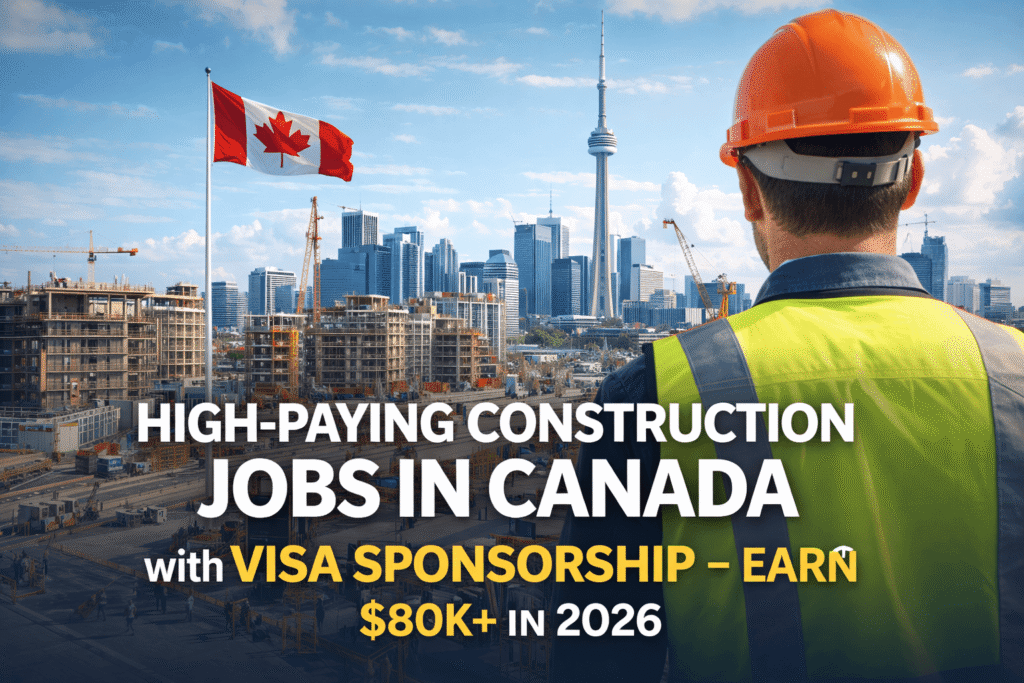
High-paying construction jobs in Canada with visa sponsorship are attracting global attention in 2026—but most content online exaggerates the ease of entry and salary expectations. The reality is more nuanced. Canada does have a structural labour shortage in construction, driven by aging workers, infrastructure expansion, and housing demand. However, employer sponsorship is selective, and foreign workers must navigate licensing, LMIA approvals, and regional demand differences.
This guide breaks down the real opportunities, salaries, visa pathways, and hidden barriers so you can approach the Canadian construction job market strategically—not blindly.
Construction Jobs in Canada with Visa Sponsorship Economic & Labour Market Context (Why Canada Needs Foreign Construction Workers)
Canada’s construction labour shortage is not hypothetical—it is structurally embedded.
1. Housing Crisis + Population Growth
Canada is targeting hundreds of thousands of new housing units annually, yet domestic labour supply cannot meet demand. Immigration targets (400,000+ newcomers yearly) increase housing pressure, forcing rapid construction expansion.
2. Aging Workforce
Over 20% of construction workers are nearing retirement age. Replacement demand is rising faster than new local entrants into skilled trades.
3. Regional Imbalance
- Urban centers (Toronto, Vancouver): High demand but competitive hiring
- Rural/provincial regions (Alberta, Saskatchewan): Higher sponsorship probability
👉 Cause → Effect:
Labour shortage → Project delays → Wage inflation → Increased openness to foreign workers (but only for in-demand trades)
High-Paying Visa Sponsorship Jobs (Construction Sector Breakdown)
1. Construction Project Managers
Why demand exists: Large-scale housing and infrastructure projects require experienced oversight.
- Salary: $85,000 – $130,000+
- Entry vs Experienced: Entry rarely sponsored; experienced professionals preferred
- Sponsorship difficulty: High
- Trend: Growing
👉 Insight: Employers prefer candidates already in Canada unless you bring 10+ years experience or certifications (PMP, etc.)
2. Electricians (Industrial & Commercial)
Why demand exists: Electrification projects, renewable energy, and infrastructure upgrades.
- Salary: $70,000 – $100,000
- Entry vs Experienced: Apprenticeship required
- Sponsorship difficulty: Moderate
- Trend: Strong growth
👉 Barrier: Provincial licensing required (Red Seal certification)
3. Welders
Why demand exists: Oil & gas, pipelines, and infrastructure projects.
- Salary: $65,000 – $95,000
- Entry vs Experienced: Experience matters more than degrees
- Sponsorship difficulty: Moderate to High
- Trend: Stable demand
👉 Insight: Western Canada (Alberta) has higher demand + better sponsorship chances
4. Heavy Equipment Operators
Why demand exists: Large-scale construction and mining projects.
- Salary: $60,000 – $90,000
- Entry vs Experienced: Certification required
- Sponsorship difficulty: Moderate
- Trend: Growing
👉 Employers prefer candidates with hands-on experience + safety certifications
5. Carpenters
Why demand exists: Housing construction boom.
- Salary: $55,000 – $85,000
- Entry vs Experienced: Apprenticeship system
- Sponsorship difficulty: Moderate
- Trend: High demand
6. Plumbers
Why demand exists: Residential and commercial infrastructure expansion.
- Salary: $60,000 – $90,000
- Entry vs Experienced: Licensing required
- Sponsorship difficulty: Moderate
- Trend: Consistent demand
7. General Construction Labourers
Why demand exists: Entry-level roles supporting skilled trades.
- Salary: $40,000 – $60,000
- Entry vs Experienced: Entry-level accessible
- Sponsorship difficulty: Low to Moderate
- Trend: High demand
👉 Reality: Easier entry point, but lower salary and fewer sponsorship offers
Construction Jobs in Canada with Visa Sponsorship Salary Reality Table (2026)
| Job Role | Average Salary | Entry vs Experienced | Sponsorship Chance |
|---|---|---|---|
| Project Manager | $85K–$130K | Experience required | Low |
| Electrician | $70K–$100K | Apprenticeship needed | Moderate |
| Welder | $65K–$95K | Skill-based | Moderate |
| Equipment Operator | $60K–$90K | Certification needed | Moderate |
| Carpenter | $55K–$85K | Apprenticeship | Moderate |
| Plumber | $60K–$90K | Licensed | Moderate |
| Labourer | $40K–$60K | Entry-level | Low–Moderate |
READ ALSO:
- $100K+ Tech Jobs in Australia with Visa Sponsorship for Foreign Workers (Apply Now – 2026 Guide)
- Top UK Visa Sponsorship Jobs Paying £40,000+ for Foreigners in 2026 (Complete Guide)
- Earn $70K+ in Warehouse Jobs in Canada with Visa Sponsorship – No Experience Needed (2026 Guide)
Construction Jobs in Canada with Visa Sponsorship Visa Sponsorship Pathways (Canada-Specific)
1. LMIA-Based Work Permit
Most construction jobs with visa sponsorship go through the Labour Market Impact Assessment (LMIA):
- Employer proves no Canadian can fill the role
- Job offer issued
- Worker applies for a work permit
👉 Reality: Employers avoid LMIA unless the role is hard to fill
2. Provincial Nominee Programs (PNPs)
Some provinces prioritize construction workers:
- Alberta
- Saskatchewan
- British Columbia
👉 Advantage: Easier pathway to permanent residency
3. Express Entry (Skilled Trades Stream)
- Targets certified tradespeople
- Requires work experience + language test
👉 Best for long-term immigration strategy
Construction Jobs in Canada with Visa Sponsorship Eligibility & Hidden Barriers
1. Credential Recognition
Foreign experience may not be fully accepted without Canadian certification
2. Licensing Requirements
Trades like electricians and plumbers require provincial licensing exams
3. Language Requirements
Minimum:
- IELTS / CELPIP
- Functional English required for safety compliance
4. Employer Bias
Employers often prefer:
- Candidates already in Canada
- Workers with local experience
Construction Jobs in Canada with Visa Sponsorship Step-by-Step Application Strategy (What Actually Works)
Step 1: Target the Right Job Boards
- Job Bank Canada
- Indeed Canada
- Provincial job portals
👉 Filter for:
- “LMIA available”
- “Foreign workers welcome”
Step 2: Avoid Fake Listings
Red flags:
- Asking for payment
- No company details
- Unrealistic salaries
Step 3: Localize Your Resume
- Use Canadian format
- Highlight trade experience
- Add certifications clearly
Step 4: Apply Strategically
Focus on:
- Smaller companies
- Rural areas
- High-demand provinces
Step 5: Network (Underrated Advantage)
- LinkedIn outreach
- Trade forums
- Recruitment agencies
👉 Many sponsorship jobs are never publicly advertised
Construction Jobs in Canada with Visa Sponsorship Top Hiring Regions & Why They Sponsor
Alberta
- Oil & gas + infrastructure
- High demand for welders, operators
Saskatchewan
- Labour shortages due to smaller population
- More open to foreign workers
British Columbia
- Construction boom
- Moderate sponsorship opportunities
Construction Jobs in Canada with Visa Sponsorship Challenges Most Articles Ignore
- LMIA processing delays (2–4 months)
- High competition from international applicants
- Cost of relocation (flights, housing deposits)
- Seasonal work fluctuations
- Risk of policy tightening
Construction Jobs in Canada with Visa Sponsorship Expert Tips (Insider-Level Strategy)
- Target rural provinces first → higher sponsorship chances
- Get trade certification before applying → increases credibility
- Apply during peak hiring seasons (spring/summer)
- Focus on shortage occupation lists
- Combine job search with immigration pathway strategy
Construction Jobs in Canada with Visa Sponsorship FAQ (High-Intent Questions)
1. Can I get construction jobs in Canada with visa sponsorship in 2026?
Yes, but mainly for in-demand trades like electricians, welders, and carpenters, not general labour roles.
2. What is the easiest construction job to get with sponsorship?
General labour roles are easier but offer lower salaries and fewer sponsorship opportunities.
3. Do I need certification to work in construction in Canada?
Yes, most skilled trades require provincial licensing or Red Seal certification.
4. How long does LMIA processing take?
Typically 2–4 months, depending on the employer and job role.
5. Can construction jobs lead to permanent residency?
Yes, through:
- Provincial Nominee Programs
- Express Entry (Skilled Trades)
Conclusion
High-paying construction jobs in Canada with visa sponsorship are real—but they are not easy wins. The opportunity exists because of genuine labour shortages, but employers remain selective, and regulatory barriers are significant.
The smartest approach is to:
- Target high-demand trades
- Understand visa pathways
- Apply strategically, not randomly
If you treat this as a long-term migration strategy, not just a job search, your chances of success increase significantly.
Leave a Reply