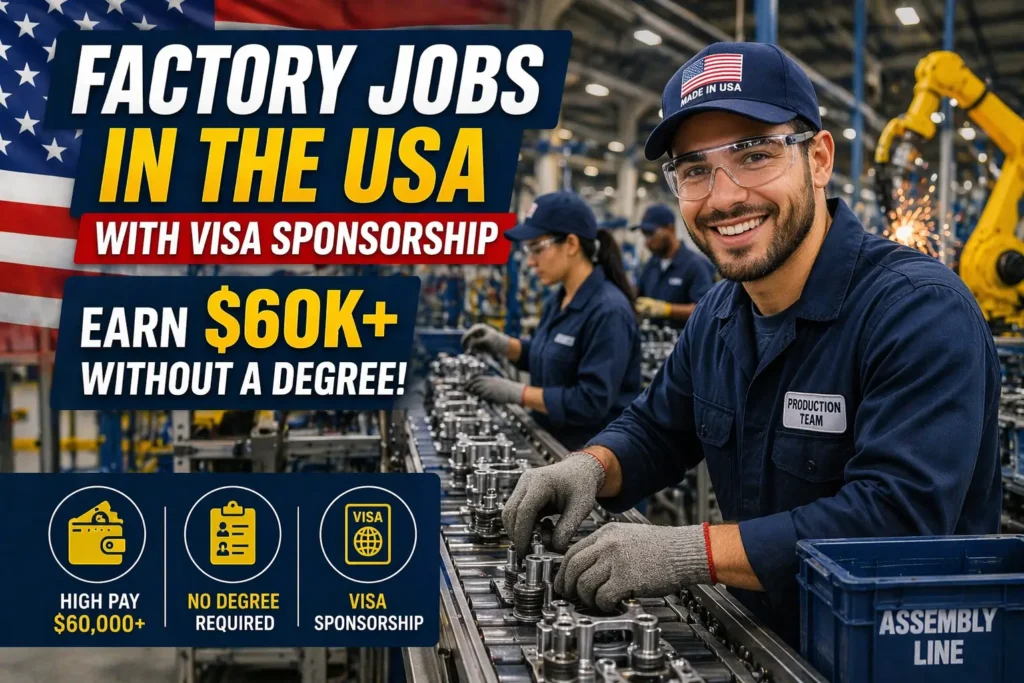
Factory jobs in the USA with visa sponsorship are gaining massive attention among global job seekers looking for stable, well-paying opportunities without needing a university degree. But here’s the truth most websites avoid: while factory jobs are widely available, visa sponsorship for these roles is limited, selective, and often misunderstood.
This article breaks down the real opportunities behind factory jobs in the USA with visa sponsorship, including where the demand actually exists, which roles can realistically pay $60K+, and how foreign workers can position themselves strategically in 2026. If you approach this blindly, you’ll struggle. If you understand the system, you can find a pathway.
Factory jobs in the USA with visa sponsorship Economic & Labour Market Context (USA Manufacturing Sector)
The demand for foreign workers in U.S. factories is not random—it’s driven by structural labour market shifts.
1. Aging Workforce in Manufacturing
The U.S. manufacturing workforce is aging rapidly. A significant portion of skilled factory workers (machinists, technicians, operators) are retiring.
Effect: Employers face a skills gap, especially in mid-level technical roles.
2. Reshoring of Manufacturing (2024–2026 Trend)
Due to global supply chain disruptions, companies are bringing production back to the U.S. (reshoring).
Effect: Increased demand for factory workers, particularly in:
- Automotive
- Electronics
- Food processing
- Packaging
3. Immigration System Constraint (Critical Reality)
Unlike countries like Canada or Australia, the U.S. does NOT have a straightforward visa pathway for low-skilled factory jobs.
Key visa types include:
- H-2B visa
- EB-3 visa
Key Insight:
The biggest barrier is not job availability—it’s visa eligibility and employer willingness to sponsor.
CLICK HERE TO APPLY FOR FACTORY JOBS IN THE USA
High-Paying Factory Jobs in the USA with Visa Sponsorship
Not all factory jobs qualify for sponsorship. The roles below are the most realistic pathways.
1. CNC Machine Operator / Machinist
- Salary: $50,000 – $65,000+
- Why Demand Exists: Precision manufacturing growth
- Entry vs Experienced: Skilled workers earn significantly more
- Sponsorship Difficulty: Medium
- Trend: Strong growth
These roles are more likely to qualify under skilled worker visa categories.
2. Production Supervisor
- Salary: $55,000 – $70,000
- Why Demand Exists: Need for workflow management
- Entry vs Experienced: Experience required
- Sponsorship Difficulty: High
- Trend: Stable
3. Industrial Maintenance Technician
- Salary: $55,000 – $68,000
- Why Demand Exists: Automation requires maintenance expertise
- Entry vs Experienced: Technical training required
- Sponsorship Difficulty: Medium
- Trend: Growing
4. Assembly Line Worker (Specialized Production)
- Salary: $40,000 – $55,000
- Why Demand Exists: High production demand
- Entry vs Experienced: Entry-level roles available
- Sponsorship Difficulty: Low
- Trend: Stable
Most of these roles do NOT offer sponsorship unless tied to a larger visa pathway.
5. Forklift Operator / Warehouse-Factory Hybrid Roles
- Salary: $45,000 – $60,000
- Why Demand Exists: Logistics integration with manufacturing
- Entry vs Experienced: Certification helps
- Sponsorship Difficulty: Low to Medium
- Trend: Growing
Factory jobs in the USA with visa sponsorship Salary Reality Table (USA Factory Jobs 2026)
| Job Role | Average Salary | Entry vs Experienced | Sponsorship Chance |
|---|---|---|---|
| CNC Machinist | $50K–$65K+ | High gap | Medium |
| Production Supervisor | $55K–$70K | High gap | High |
| Maintenance Technician | $55K–$68K | High gap | Medium |
| Assembly Worker | $40K–$55K | Low gap | Low |
| Forklift Operator | $45K–$60K | Moderate gap | Low–Medium |
👉 Reality Check:
The $60K+ salary is achievable—but typically in skilled or supervisory roles, not basic factory positions.
READ ALSO:
- Best Paying Farm Jobs in Australia with Visa Sponsorship – Earn Up to $65K Annually (2026 Guide)
- Companies in Australia That Offer Visa Sponsorship to Foreign Workers (2026 Guide + Salaries)
Factory jobs in the USA with visa sponsorship Visa Sponsorship Pathways (USA System Explained)
1. Temporary Work Route
- H-2B visa
How it works:
- Employer proves labor shortage
- Temporary (seasonal or short-term)
- Limited annual cap
Not ideal for long-term settlement.
2. Permanent Work Route
- EB-3 visa
Categories:
- Skilled workers
- Professionals
- Other workers (includes some factory roles)
Best pathway for factory workers seeking long-term relocation.
3. Internal Transfer (Rare but Powerful)
- Multinational companies transfer employees to U.S. factories
Common Misconception:
Most factory jobs in the U.S. do NOT automatically include visa sponsorship. Sponsorship is role-specific and employer-dependent.
Factory jobs in the USA with visa sponsorship Eligibility & Hidden Barriers
1. Skill Requirements
- Skilled factory roles require:
- Technical training
- Hands-on experience
2. Certification Barriers
- Forklift licenses
- Machinery certifications
- Safety compliance training
3. English Language
- Basic communication required
- Safety regulations demand understanding instructions
4. Employer Sponsorship Costs
- Legal fees + processing costs
- Employers prefer:
- Local workers
- Candidates already in the U.S.
5. Visa Caps & Delays
- H-2B visa has annual limits
- EB-3 processing can take years
Factory jobs in the USA with visa sponsorship Step-by-Step Application Strategy (Winning Approach)
Step 1: Target the Right Job Type
Focus on:
- Skilled factory roles
- Technical positions
Step 2: Use Verified Job Platforms
- Indeed USA
- Glassdoor
- Company career pages
Step 3: Identify Real Sponsorship Signals
Look for:
- “Visa sponsorship available”
- “Willing to sponsor EB-3 candidates”
Step 4: Optimize Your Resume
- Highlight practical experience
- Focus on:
- Machinery
- Production
- Safety training
Step 5: Apply Strategically
- Avoid mass applications
- Target companies with:
- Labour shortages
- High turnover
Top Hiring Regions & Why They Sponsor
1. Midwest (Ohio, Michigan, Indiana)
- Manufacturing hubs
- Labour shortages
- More openness to sponsorship
2. Southern States (Texas, Georgia)
- Rapid industrial growth
- Lower labour costs
- Expanding factories
3. Rural Industrial Zones
- Less competition
- Higher employer reliance on foreign workers
Insight:
The less attractive the location, the higher your sponsorship chances.
Challenges Most Articles Ignore
- Visa processing delays can exceed job timelines
- High rejection rates due to visa caps
- Cost of relocation vs starting salary
- Limited job security tied to visa status
- Competition from domestic workforce
Expert Tips (Insider-Level Strategy)
- Target technical factory roles, not general labour
- Combine factory skills with automation knowledge
- Apply during production expansion cycles
- Use entry roles in other countries to gain experience
- Focus on employers already sponsoring foreign workers
FAQ – Factory Jobs in the USA with Visa Sponsorship
1. Can I get factory jobs in the USA with visa sponsorship without a degree?
Yes, but mostly in skilled roles. Entry-level jobs rarely offer sponsorship.
2. What visa is best for factory workers in the USA?
The EB-3 visa is the most realistic long-term option.
3. Do factory jobs in the USA really pay $60K?
Yes, but mainly for skilled workers like machinists and technicians.
4. How hard is it to get sponsored?
It’s competitive. Employers prefer local workers unless there is a clear skills shortage.
5. How long does the process take?
Temporary visas take months; permanent visas can take years.
Conclusion
The opportunity around factory jobs in the USA with visa sponsorship is real—but highly selective. The biggest mistake job seekers make is assuming availability equals accessibility.
If you focus on skills, strategy, and the right visa pathway, you can position yourself for success. Without that, even hundreds of applications won’t yield results.
The difference is not effort—it’s understanding how the system actually works and using that knowledge to your advantage.
Leave a Reply